
How to Build an Aerobic Base Without Burning Out
Base building develops durable running fitness through gradual volume increases and easy effort. It focuses on physiological adaptation a...
Base building develops durable running fitness through gradual volume increases and easy effort. It focuses on physiological adaptation a...

Running on asphalt and trails involves distinct biomechanical challenges. Asphalt promotes consistent stride and repetitive loading, whil...
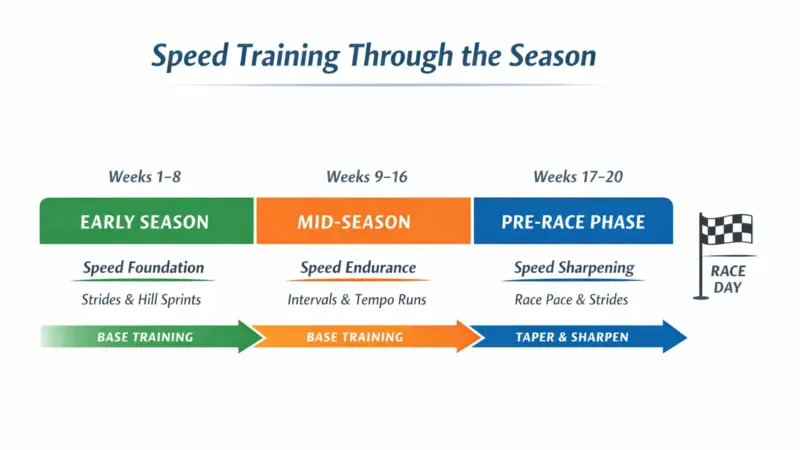
Speed training evolves throughout a running cycle. Early phases emphasize neuromuscular coordination, mid-season blends speed with endura...

Cadence is the number of steps taken per minute while running. It reflects your running rhythm and influences stride mechanics and impact...

Runners often return to the track for its unmatched precision and clarity. Unlike roads or trails, the track offers exact distances and c...

Cadence counts the steps taken per minute while running and reveals movement patterns beyond pace alone. It affects stride length, impact...

Training consistency is frequently linked to discipline, but this view overlooks how life’s complexities affect running. True consistency...

Fartlek training blends steady running with intentional speed variations, challenging the body to adapt to changing intensities. This app...
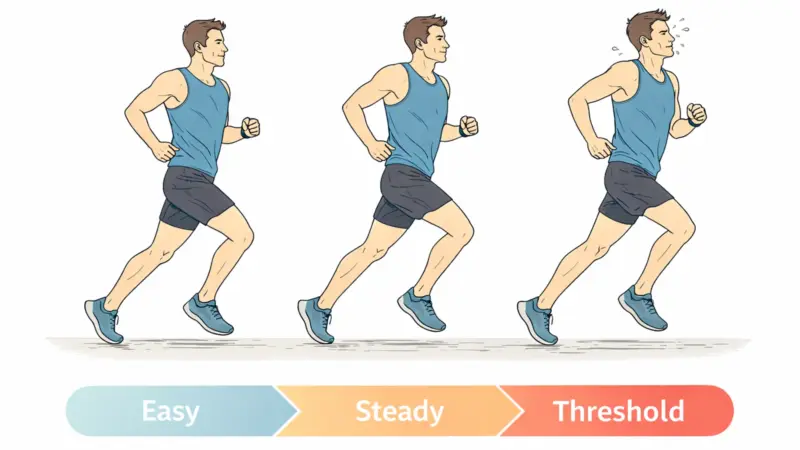
Lactate levels rise as running intensity increases, signaling the body’s shift from aerobic to anaerobic energy production. This process ...

Conventional wisdom suggests starting training cycles with easy miles to build aerobic fitness and reduce injury risk. Yet some runners i...

Warm-ups are standard in running but may not be essential before easy runs if started at a truly gentle pace. This article examines how p...

Track lanes are not uniform in length; outer lanes are longer than the inside lane. This affects pacing accuracy and training outcomes. R...