
Running Economy: The Efficiency Nobody Trains Directly
Two runners with identical VO2 max and lactate threshold often perform differently. This difference is explained by running economy — the...
Two runners with identical VO2 max and lactate threshold often perform differently. This difference is explained by running economy — the...

Training often reaches a phase where runs feel controlled and recovery seems manageable—commonly described as feeling fit. However, benea...

Lactate is often blamed for fatigue and slowing in running, but this is a misconception. It is continuously produced and recycled as a vi...
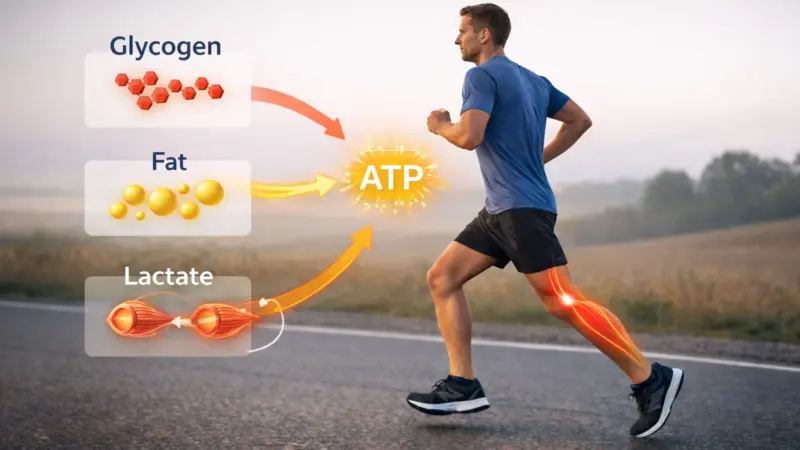
Running requires muscles to produce energy continuously through ATP. Carbohydrates and fat serve as primary fuels, with glycogen supporti...
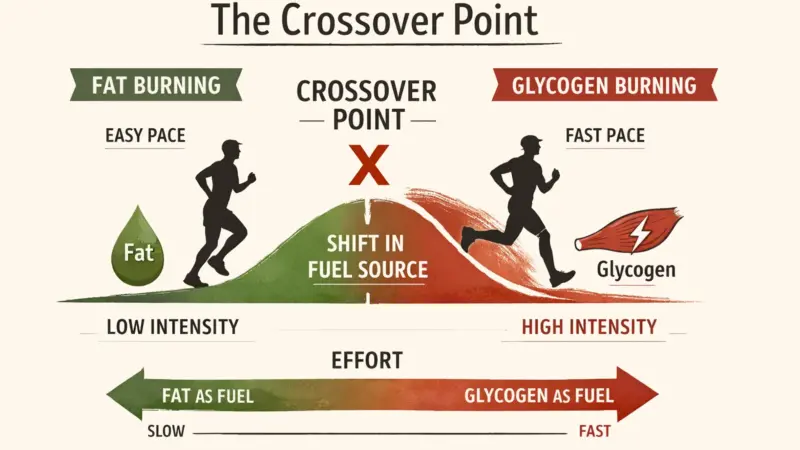
Running pace affects the body’s choice of fuel. At slower speeds, fat provides most energy. Increasing pace shifts reliance toward glycog...

Distance runners often encounter a sudden drop in energy late in races, commonly called ‘hitting the wall.’ This occurs as glycogen store...

Easy runs are performed at a pace that prioritizes fat as the primary fuel source. This occurs because fat metabolism meets energy demand...