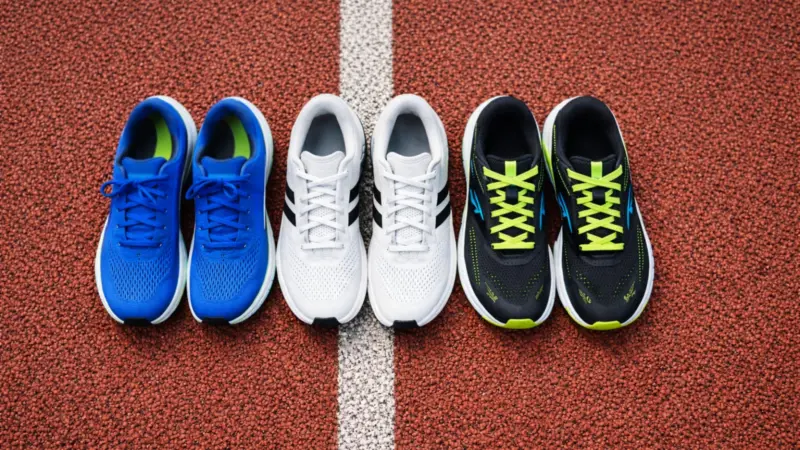
Why Rotating Running Shoes Actually Matters
For many runners, one reliable pair of shoes feels like enough. You find something comfortable, it carries you through weekday runs and weekend long efforts, and you stop thinking about it. Simple works.
But as training volume increases, or as workouts become more varied, that simplicity can start working against you. Faster sessions, longer efforts, uneven terrain, and recovery days all place slightly different demands on the body. A single shoe can handle a lot. It just cannot optimize everything.
Rotating shoes is not about building a collection. It is about managing stress.
When Training Changes, Demands Change
Running is repetitive by nature. Every step follows the same pattern, impact, load, push-off. Over a typical run, that pattern repeats thousands of times.
As mileage increases and training becomes more varied, the forces involved change in both magnitude and direction. The body adapts well to stress, but adaptation depends not only on consistency, but also on variation.
If every run is done in the same shoe, with the same geometry and cushioning response, stress is absorbed in nearly identical ways each time. Over weeks and months, that uniformity can concentrate load on the same tissues. Small variation interrupts that pattern.
Rotation and Injury Risk
There is some research suggesting that runners who rotate shoes may experience lower injury rates compared to those who rely on a single pair. The mechanism is not mysterious. It is mechanical.
Different shoes alter:
- heel-to-toe drop
- midsole firmness
- torsional stiffness
- platform width
- rocker geometry
These differences subtly change how force travels through the ankle, knee, and hip. A lower-drop shoe may increase load on the Achilles and calf. A softer, higher-stack trainer may reduce impact loading but shift demands higher up the chain. A firmer shoe can encourage quicker ground contact.
Over thousands of steps, these small changes redistribute stress. Instead of repeatedly loading the same structures, the body experiences slight variation in stimulus. For runners increasing mileage, that redistribution can matter.
The Physiology of Load Distribution
Tendons, muscles, and connective tissues adapt gradually. But adaptation happens within limits. Too little stress produces no stimulus. Too much repeated stress can lead to breakdown before adaptation is complete.
Shoe rotation does not reduce total training load. It changes how that load is distributed. Think of it as changing the angle of a flashlight beam. The intensity remains the same, but the focus shifts. Over time, that shift can help prevent localized overload.
This becomes especially relevant for runners who:
- experience recurring Achilles tightness
- notice consistent knee irritation
- increase mileage quickly
- begin introducing faster workouts
Variation in footwear offers a subtle way to adjust stress without changing the training plan itself.
Foam Recovery and Longevity
There is also a practical reason to rotate shoes. Midsole materials compress under load and need time to recover. After a run, cushioning remains slightly compressed before gradually returning to its original shape. Allowing a shoe 24 to 48 hours between runs gives the midsole more time to rebound.
When you alternate between pairs, each shoe spends less time under continuous stress. Over months, this can help maintain its feel for longer. It does not double the lifespan, but it can slow how quickly a shoe loses its responsiveness.
Matching Shoes to the Session
Not every run demands the same qualities. Long runs favor comfort and stability. Faster sessions benefit from lighter, more responsive shoes. Recovery runs feel smoother in softer, more forgiving models.
Trail runs require grip and lateral support.
Using the right shoe for the session is not indulgent. It is a logical extension of structured training.
For many runners, a simple rotation works well:
- a daily trainer for most mileage
- a lighter shoe for workouts
A third pair, for trails or specific conditions, becomes useful depending on terrain and climate. There is no need to build this all at once. Often, a new shoe becomes the primary trainer, while the older pair shifts into easier runs.
Who Does Not Need Rotation
Not every runner needs multiple shoes.
If you:
- run a few times per week
- keep mileage moderate
- train on consistent surfaces
- have no recurring discomfort
one well-chosen daily trainer may be enough.
Rotation is a tool, not a requirement. The important part is awareness. Most running shoes last roughly 300 to 500 miles. If cushioning feels flat, impact feels harsher, or fatigue increases without explanation, it may be time to replace or diversify.
Managing Repetition Intelligently
Running will always be repetitive. That repetition builds fitness, but it can also build strain. Shoe rotation introduces small, controlled variation without changing the structure of training. It redistributes load, allows materials to recover, and aligns footwear with different types of effort.
It is not about owning more gear. It is about adjusting stress in subtle, deliberate ways. Over a single run, the difference is barely noticeable. Over months of consistent training, those small differences accumulate. And in distance running, accumulation is what shapes outcomes.