The Right Time to Work on Speed
Speed is a tempting word for runners. It suggests lighter legs and faster times — yet it’s also one of the easiest ways to unbalance a training plan. The problem isn’t speed itself, but timing. Speed work isn’t a single phase or a fixed set of workouts; it’s a quality that changes form as the season unfolds. Understanding that rhythm often separates a strong race from a frustrating one.
Early in the Season: Waking Up the Speed
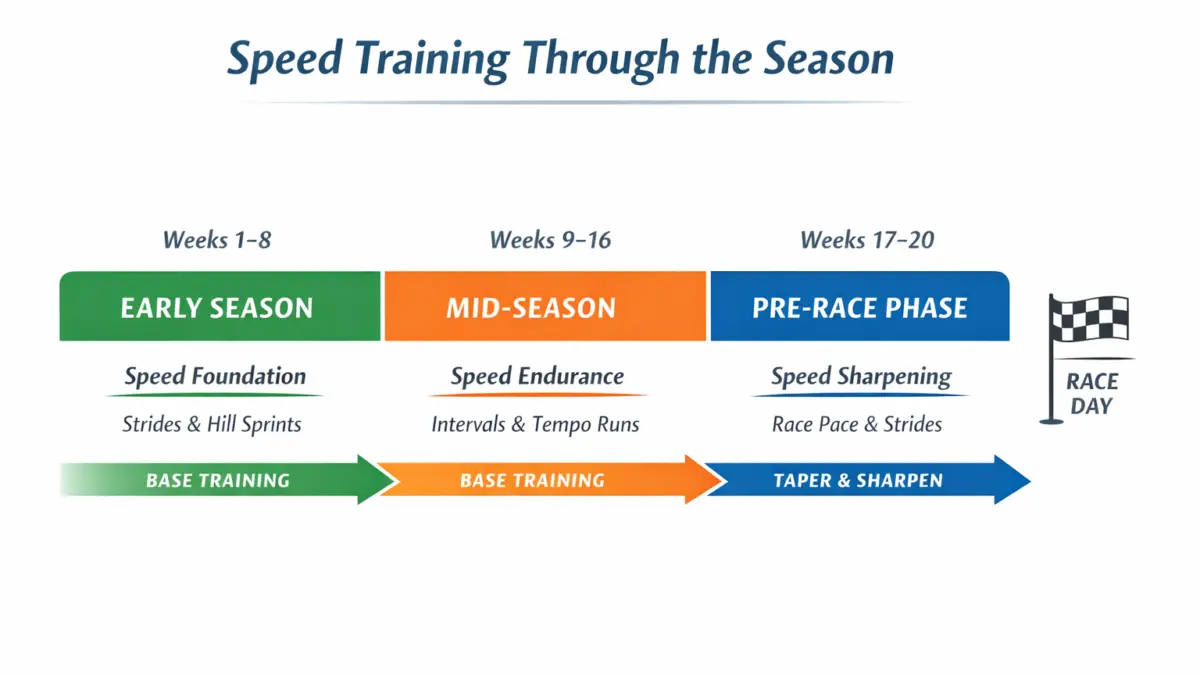
The best moment to introduce pure speed is at the beginning of a training cycle, when the body is fresh and overall workload is still controlled. Short sprints, gentle hill accelerations, and coordination drills reawaken the neuromuscular system after an easier period or a break.
These efforts are brief — usually no more than 8 to 10 seconds — and followed by full recovery. Their purpose isn’t to build endurance or fatigue the legs, but to sharpen movement and improve running economy. This early work raises your “speed ceiling,” making all later training — even easy running — feel smoother and more efficient.
Mid-Season: Connecting Speed with Endurance
Once the aerobic base is in place, speed takes on a different role. During the middle months of a training block, the focus shifts toward sustaining faster paces under fatigue. This is where structured interval training and tempo runs become central: controlled 400- to 1000-metre repeats, threshold efforts, and steady progressions.
Here, speed becomes usable. The neuromuscular sharpness developed earlier allows you to handle intensity with better form, more control, and less strain. Speed is no longer isolated — it’s integrated into endurance.
Pre-Race Phase: Sharpening the Edge
As race day approaches, heavy speed sessions lose their value. The emphasis moves toward rhythm, precision, and recovery. A small dose of fast running — short strides or relaxed 200-metre repeats — keeps the legs responsive without adding fatigue.
At this stage, the goal is not to build new fitness, but to express the fitness already earned. Speed work becomes a reminder, not a stimulus.
The Rhythm of Speed
Speed is not something you “finish” and move on from. It’s a quality that evolves — from gentle awakening, to endurance, to sharpening. Runners who respect that progression tend to train more consistently and arrive at the start line feeling prepared rather than worn down.
Used at the right time, speed training doesn’t just make you faster. It teaches you how to move efficiently, sustain effort intelligently, and race with control.
Quick Takeaway: How to Time Your Speed Work
Early season: Short, pure speed — sprints, strides, and drills to wake up coordination and efficiency.
Mid-season: Speed endurance — intervals and tempo runs that connect fast legs with aerobic strength.
Pre-race phase: Sharpening — light, fast sessions to stay responsive without adding fatigue.
Speed isn’t a single phase. It’s a skill that changes with the season.